> For the complete documentation index, see [llms.txt](https://docs.whales.market/llms.txt). Markdown versions of documentation pages are available by appending `.md` to page URLs; this page is available as [Markdown](https://docs.whales.market/pre-market/cross-chain-settlement/how-the-mechanism-works.md).
# How the Mechanism Works
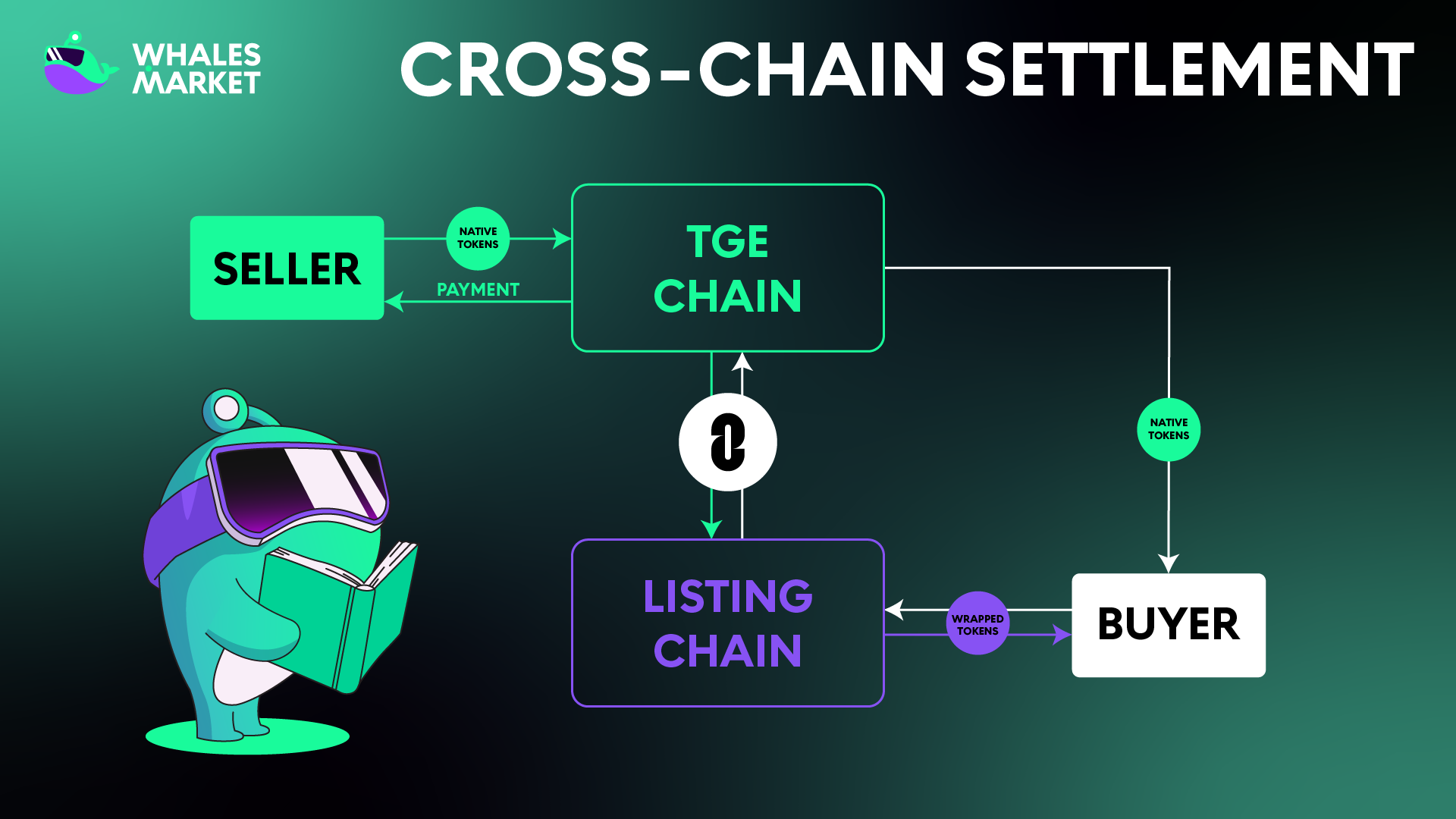
* Seller holds tokens on the TGE Chain
* Seller lists an order on the Listing Chain
* When settling, tokens are bridged from TGE Chain to Listing Chain
* Wrapped tokens are minted on the Listing Chain at a 1:1 ratio
* Original tokens are locked in a smart contract on the TGE Chain
Value is preserved. No duplication occurs.
***
### FAQs
How do tokens move from the TGE Chain to the Listing Chain?
When settlement begins, tokens are bridged via LayerZero, which triggers the locking of assets on the TGE Chain and the minting of wrapped tokens on the Listing Chain.
What is the minting ratio for wrapped tokens?
Wrapped tokens are minted on the Listing Chain at a strict 1:1 ratio. This ensures that every represented unit is fully collateralized by an original token.
What happens to my original tokens during the settlement?
The original tokens are securely locked in a smart contract on the TGE Chain to preserve value and prevent any duplication or synthetic inflation.
Does the buyer need to bridge tokens to participate in a trade?
While the buyer starts on the Listing Chain, they must manually initiate a bridge transaction after the trade to claim and move their new assets back to the TGE Chain.
Why are tokens locked in a smart contract instead of being moved directly?
Locking tokens ensures the assets remain native to their original chain while providing a verifiable and secure 1:1 backing for the trade occurring on the Listing Chain.